
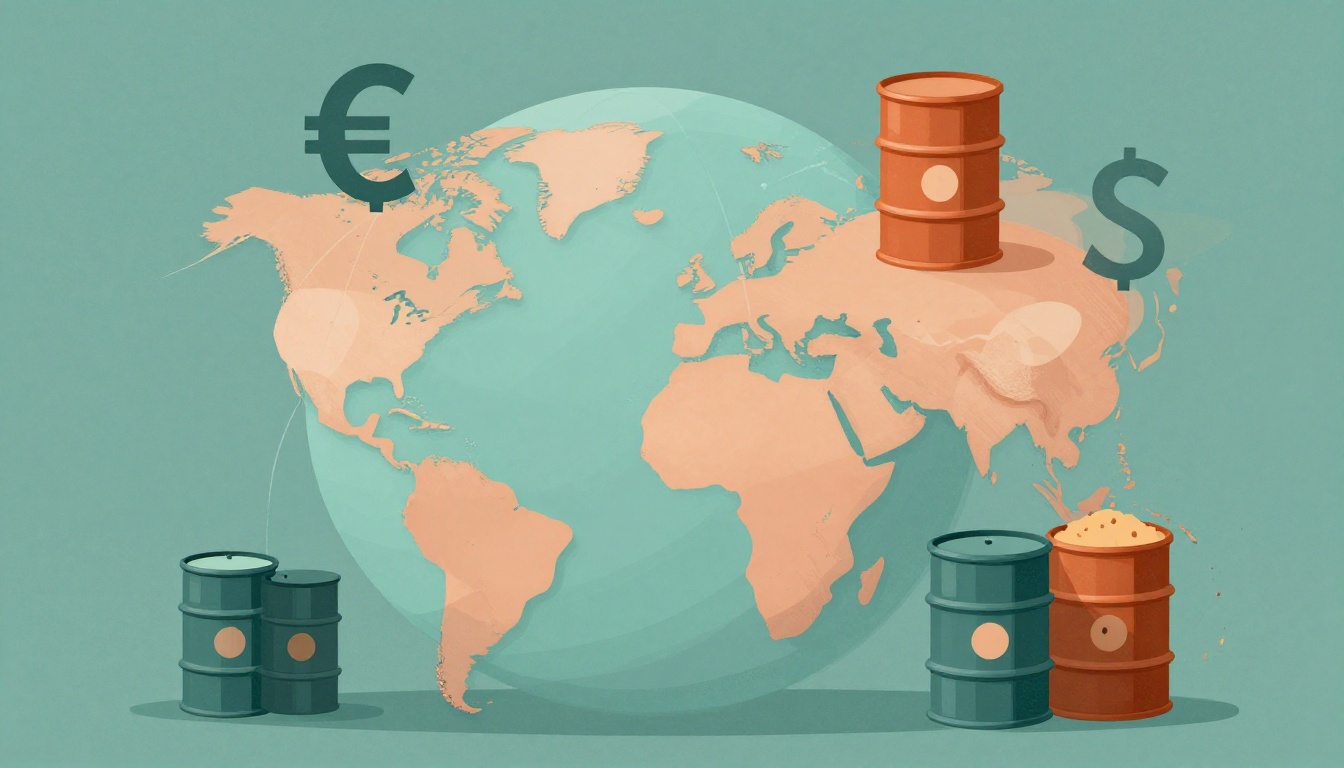
When you price a commodity in one currency but settle in another, every day of delay between contract signing and payment exposes your margin to exchange rate movements. For institutional traders and procurement officers, this is not a theoretical risk — it is a direct hit to P&L.
Currency risk in commodity contracts typically takes three forms: transaction risk, translation risk, and economic risk. Transaction risk arises from the time gap between agreeing a price and settling the invoice. Translation risk affects the reported value of foreign subsidiaries' earnings. Economic risk reflects the long-term impact of sustained currency shifts on your competitive position (Millbank FX).
Which type of currency risk arises from the time delay between agreeing a contract price and settling the payment?
Select one answer.
The three hedging instruments you need to know
Forward contracts are the most common tool. You lock in an exchange rate today for a future settlement date. This gives certainty on the local-currency value of your receivable or payable. The forward rate equals the spot rate plus a premium or discount reflecting the interest rate differential between the two currencies (Stanford Administrative Guide).
Currency options give you the right, but not the obligation, to exchange at a predetermined rate. You pay a premium for this flexibility. Options are useful when you have uncertain payment dates or want to benefit from favorable rate movements while capping downside.
Natural hedging involves structuring your operations so that revenues and costs in the same foreign currency offset each other. For example, if you source inputs and sell outputs in the same currency, you reduce the need for financial derivatives.
A practical framework for commodity traders
- Identify your exposure. Map every contract by currency pair, notional amount, and settlement timeline. Separate transaction risk from translation and economic risk.
- Quantify the impact. Run scenario analyses: what happens to your margin if the foreign currency moves 5%, 10%, or 15% against you?
- Choose your hedge ratio. You do not need to hedge 100%. Many firms hedge 50–80% of forecast exposure to balance protection with cost.
- Select the instrument. Use forwards for known, fixed-date payments. Use options for contingent or flexible exposures. Combine both in a collar strategy if you want a defined range.
- Monitor and adjust. Currency markets move continuously. Review your hedge program quarterly and adjust as contract terms or market conditions change.
Why integrated hedging matters
Separating FX and commodity price risk creates a false sense of protection. Research shows that commodity price uncertainty can lead to short-run depreciation of commodity-currency exchange rates (ScienceDirect). An integrated approach — hedging both price and currency simultaneously — gives a truer picture of your economic exposure and protects margins more effectively.
Common pitfalls to avoid
- Hedging only part of the exposure. A partial hedge can still leave you vulnerable if the unhedged portion moves sharply.
- Ignoring basis risk. The hedge instrument may not perfectly track the underlying exposure, especially for illiquid currency pairs.
- Treating hedging as a profit center. The goal is risk reduction, not speculation. Measure success by how well you preserved budgeted margins, not by whether the hedge made money.
How the Resident Expert Can Help
VERTEX Strategic Group provides strategic access and institutional execution across cross-border trade, infrastructure, and commodities. Their team understands the interplay of currency risk, procurement pathways, and regulatory navigation in complex jurisdictions. For qualified institutional mandates, they offer specialized pathways that integrate FX risk management into broader deal structuring. Visit VERTEX Strategic Group to learn more.
Quiz
Test your understanding of currency risk in commodity contracts.